What does the solo life in Rust actually look like when one player holds a monument alone?
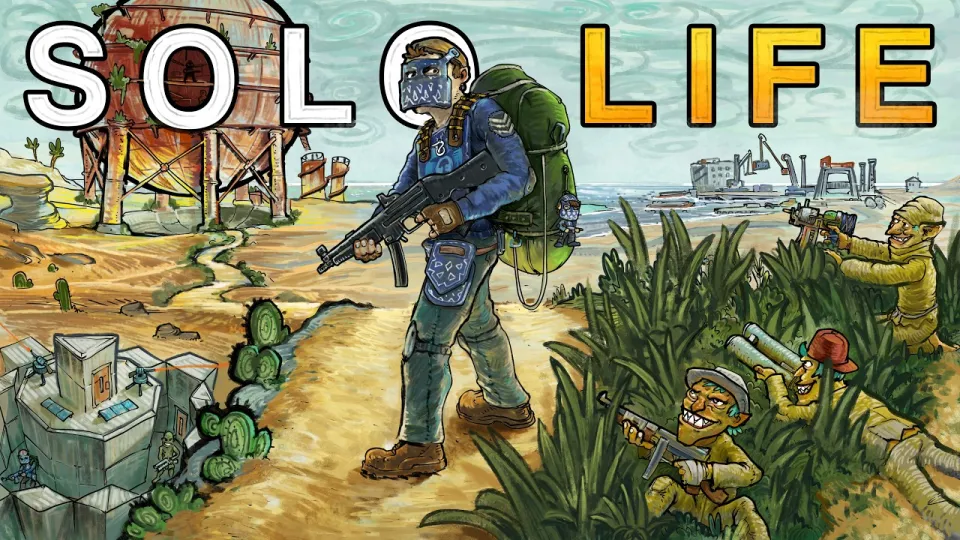
Video: Rust - THE SOLO LIFE V16
Need articles like this for your video? They help promote it on YouTube and Google — order them in the Telegram bot @sat_sit_bot. The bot writes and publishes the articles itself (with your YouTube video embedded) on popular topical websites (no ads). Your first 50 articles are free.
· based on the channel Blooprint
Key takeaways
- Solo Rust means running monuments, farming and defending a base with no teammate to cover a respawn or watch your back.
- Blooprint's The Solo Life V16 shows a solo player holding an OP monument while multiple neighbors try to push him out.
- A solo base survives on cost efficiency: cheap starters, hidden loot rooms and a second spawn point beat thick walls early.
- Raid defense as a solo is about information first: counting explosives, tracking push routes and picking fights you can reset.
- The episode followed A Solo's Journey 4 and confirmed the channel's shift toward more solo-focused videos.
Rust solo life is the practice of playing the game with no teammates: one player farms, builds, runs monuments and defends everything alone, which means every fight has to be winnable without a respawn or a second pair of eyes. In Rust - THE SOLO LIFE V16 on the Blooprint channel, that approach is tested at an OP monument, where a single player holds ground against several angry neighbors at once. If you want to see the sponsored game behind the episode, you can grab the free War Thunder bonus via Blooprint's link and support the channel at the same time.
Why holding a monument alone is the hardest version of solo Rust
A monument is a resource engine and a target at the same time, so controlling one solo means you are farming faster than a group can react to you. Monuments concentrate loot, radiation, puzzles and traffic: every other player on the server knows the routes, the timing and the exits, which is exactly why a solo player who camps one becomes a shared problem for the neighborhood.
Holding it works only when you treat the monument as a temporary position rather than a home. The practical pattern looks like this:
- Scout the monument before you commit and note which approaches are covered by your own sightlines.
- Clear the puzzle or loot route in the shortest possible loop, not the most profitable one.
- Keep an exit plan — a vehicle, a boat or a jump-down route that nobody is watching.
- Re-clear the area after every fight, because a solo kill usually means a second player is already rotating in.
- Bank the loot immediately; a full inventory at a contested monument is a donation.
The episode's premise — one player defending a monument while multiple neighbors push — is the natural end state of that pattern. Groups do not need to wipe you to beat you; they only need to make the monument unprofitable by forcing you to fight on their schedule.
What a solo base needs before the first raid comes
A solo base is not a smaller clan base; it is a different building philosophy where redundancy matters more than armor. Groups can absorb a lost loot room because someone else is already farming the replacement, while a solo player who loses the wrong room loses the wipe.
Concrete priorities for a solo build:
- Two spawn options. A main base plus a small secondary with a bag, a box and a weapon turns a wipe into a setback.
- A cheap starter first. A compact starter built in the first hour gets you into the wipe without exposing a large investment, and it can be abandoned without regret.
- Separated loot. Split valuables across at least two rooms so one breach does not end the run.
- Low-profile footprint. A base that looks poor from the outside attracts fewer raiders than a tower with sheet metal showing.
- Upkeep math. Solo players quit wipes over upkeep, not over raids; keep the base small enough that one farming session covers the cost.
Solo raiding follows the same logic in reverse: you rarely have the explosives to go through a full clan compound, so you look for soft-side doors, decayed structures and neighbors who built for looks instead of for defense.
Raid defense as a solo player, step by step
Raid defense solo is an information problem before it is a shooting problem, because you cannot out-DPS a group and you cannot afford to trade bodies. The defender's advantage is that the raiders must come to you, and every explosive they spend is a resource they cannot replace mid-raid.
- Identify the breach point. Listen for the direction of the boom and check which wall is actually taking damage, then move loot away from that side.
- Count the raid. Estimate the group size from footsteps, voices and how many players push at once; that number decides whether you fight or relocate.
- Use the compound. Peek from unexpected angles, use doors as bait and never hold the same window twice.
- Force a reset. A kill on a raider with a full inventory is worth more than a wall, so pull back, heal and re-engage instead of standing your ground.
- Decide early whether to defend or to save the loot. A solo player who moves the important boxes to a secondary base mid-raid often wins the wipe even when the main base falls.
That last point is what separates a frustrating night from a good one. Losing a base is recoverable; losing the wipe because everything was in one room is not.
Parachutes, cargo and the small plays that decide a solo wipe
Small mobility plays decide more solo wipes than aim duels, because they let one player be in two places without a teammate. A parachute drop turns a bad position into a free rotation, cargo and open-water events give a solo player loot that groups rarely contest with the same patience, and a well-timed vehicle escape removes an entire fight from the table.
The trade-off is noise and predictability. Parachutes are visible from a long distance, cargo ships attract the same players every time, and a route you run three times is a route someone is waiting on. Rotate your farming paths, avoid the obvious landing spots and treat every free drop as a position that has already been seen.
How solo players actually keep the game fun
Solo Rust is a mood-management exercise as much as a survival one, because the same wipe that gives you a clean 1v3 can take four hours of farming in a single bad decision. The players who stick with it set smaller goals: one monument run, one successful defense, one good trade, rather than a wipe-long plan that a group can delete in ten minutes.
That is also why the format resonates. A group fight is a numbers story, while a solo wipe is a decision story — every escape, every abandoned base and every refused fight is visible, and viewers can map those choices onto their own sessions. Friendly neighbors and unexpected allies matter more in solo play too: a player who does not shoot you on sight is worth more than a box of explosives.
Common questions about solo Rust, answered
Most doubts around solo play come down to time, base size and whether defending is ever worth it. A solo player who can hold a monument for an hour, keep a cheap base standing and move loot before a raid lands is already playing the game correctly, even if the kill count looks modest.
- Time budget. Two or three focused sessions beat one long grind, because solo progress compounds through stored loot, not playtime.
- Base size. Build for the raid you can survive, not the raid you would like to survive.
- Defense versus retreat. Defend when the raiders are committed and you have a reset; retreat when they have already won the wall.
- Neighbors. Treat every non-hostile player as an asset until they prove otherwise.
Useful links
- War Thunder free bonus for PC and consoles
- War Thunder mobile bonus
- Blooprint on Twitch
- Blooprint on Kick
- Blooprint on TikTok
What The Solo Life V16 says about playing Rust alone
The episode is a clean demonstration of the solo mindset: pick a profitable position, expect the whole neighborhood to react, and build a base cheap enough that losing it does not end the wipe. Holding an OP monument while several neighbors push is not a flex of raw skill but of planning — exit routes, split loot and the discipline to leave a fight that cannot be won. Blooprint's channel keeps returning to this format because solo Rust produces stories a group wipe cannot, and the audience response to the episode shows the appetite is still there. If you want to support the channel and pick up a free bonus while you are at it, use the War Thunder registration link from Blooprint.
Questions & answers
Is it possible to hold a monument in Rust as a solo player?
Yes, but only as a temporary position rather than a permanent home. A solo player holds a monument by running a short, repeatable loot loop, keeping an exit route open and banking loot immediately instead of fighting for the same ground repeatedly. The longer you stay, the more neighbors will rotate in.
How big should a solo base be in Rust?
Small enough that one farming session covers upkeep and cheap enough that losing it does not end the wipe. The priority is redundancy: a second spawn point, loot split across rooms and a starter you can abandon. Armor matters less than making a raid unprofitable for the attacker.
Should a solo player defend a base or let it go during a raid?
Defend when the raiders are committed, you have counted their numbers and you can force a reset after a kill. If the wall is already gone and the loot is exposed, moving the important boxes to a secondary base is the better play. Saving the wipe beats saving the building.
Why do solo Rust videos feel calmer than group gameplay?
Because a solo wipe is a sequence of decisions rather than a numbers fight. Every escape, refused fight and abandoned base is visible to the viewer, which makes the pacing readable even when the server itself is chaotic. That contrast is what keeps the format popular.
Source: Rust - THE SOLO LIFE V16 · Markdown version